
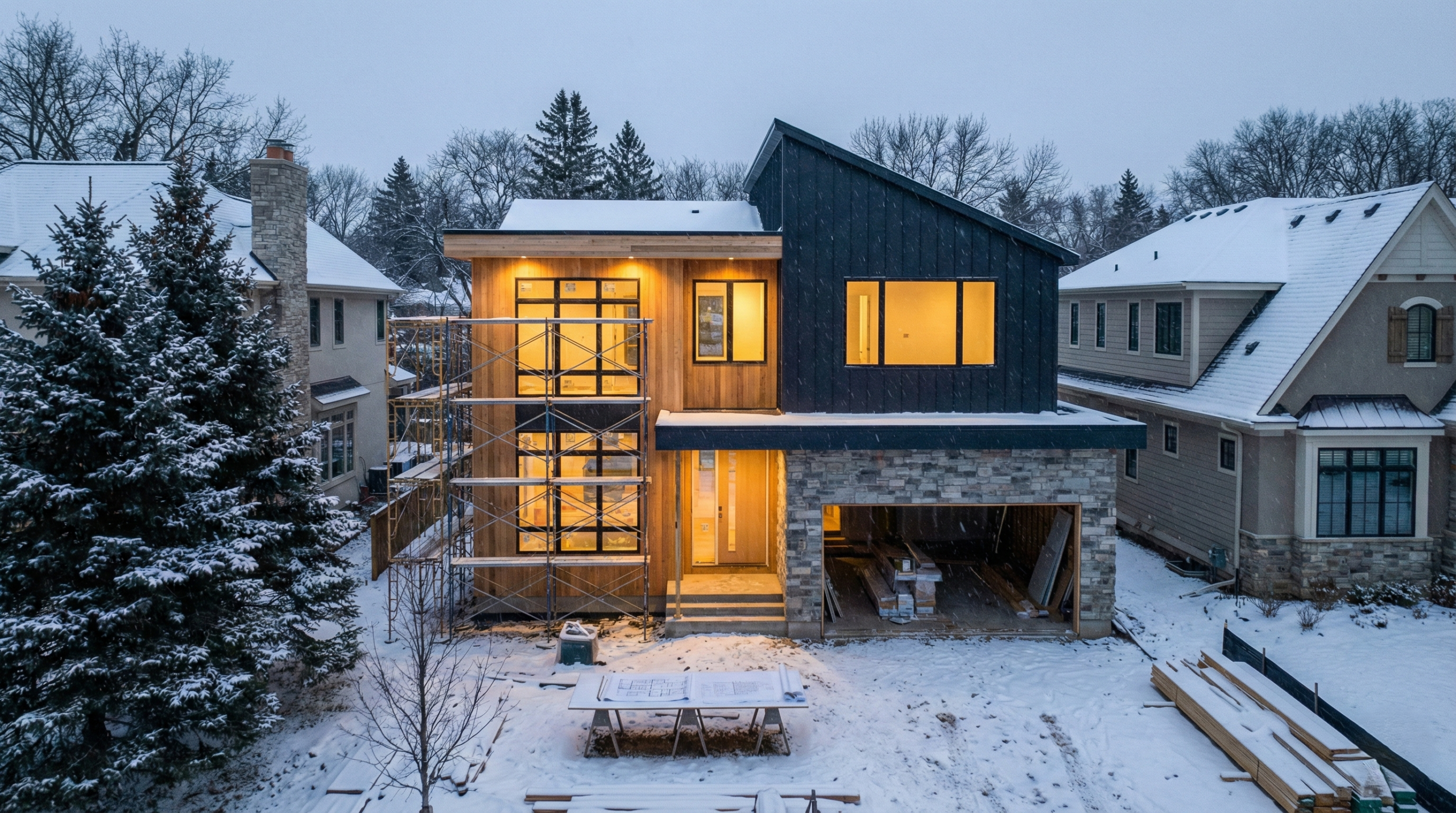
Many homeowners make their best build decisions when the calendar is quieter. Use this season to compare builders, pressure-test contracts, and align your build with your broader real estate strategy.
How to Choose a Custom Home Builder in Minneapolis (2026 Guide)
Red Flags to Avoid and Top Builders Worth Interviewing
What should you look for when choosing a custom home builder in Minneapolis in 2026—and what red flags should you avoid?
In 2026, choosing the right custom home builder in Minneapolis requires more than reviewing portfolios and pricing. Homeowners should prioritize local market expertise, transparent contracts, realistic timelines, and proven resale awareness—while avoiding builders who lack accountability, clarity, or a strong Twin Cities track record.
Why Choosing the Right Builder Matters—Especially in 2026
At Hammer Group, we increasingly work with homeowners who are planning 6–18 months ahead—often preparing to sell, downsize, or transition into main-floor living. In today’s Minneapolis–St. Paul market, a custom build is not just a lifestyle decision; it is a capital allocation decision.
Construction costs, zoning complexity, and buyer preferences in 2026 mean that builder selection directly impacts resale value, timeline risk, and long-term livability. The right builder understands not only how to construct a home—but how that home will perform in the future Twin Cities market.
Quick 2026 Builder Vetting Framework
Builders who build here regularly reduce risk—permitting, grading, climate, and neighborhood expectations are not “learn as you go.”
In 2026, ambiguity is expensive. The best contracts are readable, specific, and designed to prevent scope drift.
A great builder balances personalization with choices that hold value in future Twin Cities resale and appraisal scenarios.
Red Flags to Avoid When Interviewing a Custom Builder
Choosing a builder is as much about identifying risk as it is about identifying fit. These are the most common warning signs we advise clients to watch for:
1. Limited or Unverifiable References
A reputable Minneapolis builder should willingly provide recent local references, ideally from projects completed within the last 24–36 months. Hesitation, outdated testimonials, or an absence of third-party reviews should be treated cautiously.
Hammer Group insight: Ask whether past clients would choose the builder again—and whether the home appraised as expected.
2. Vague or Overly Flexible Contracts
In 2026, vague contracts are one of the largest financial risks in new construction. Be wary of agreements that lack:
- Clearly defined allowances
- Change-order pricing protocols
- Construction milestone schedules
- Completion benchmarks
A strong contract protects both the homeowner and the builder by reducing ambiguity.
3. Inconsistent or Reactive Communication
If communication is slow, unclear, or disorganized before construction begins, it rarely improves once the project is underway. Top-tier builders operate with structured communication systems, regular updates, and documented decisions.
4. Unrealistic Timelines
Minneapolis construction timelines in 2026 must account for permitting, labor availability, and seasonal constraints. Builders who promise aggressive completion dates without contingency planning often create downstream delays and budget stress.
What to Look For in a Top Minneapolis Custom Home Builder
Beyond avoiding red flags, homeowners should actively seek builders with the following characteristics:
1. Demonstrated Twin Cities Expertise
Local experience matters. Builders who regularly work in Minneapolis and surrounding suburbs understand municipal zoning and setbacks, soil and grading conditions, winter construction realities, and architectural styles that retain value.
2. Transparent, Itemized Pricing
Trustworthy builders provide clear, itemized budgets and explain how pricing changes are handled. Transparency in 2026 is essential as material costs and labor variables remain dynamic.
3. Strong Local Reputation and Professional Network
Builders with long-standing relationships with local trades, inspectors, and real estate professionals tend to deliver more consistent outcomes. Their reputation is often their strongest asset.
4. Quality Craftsmanship with Resale Awareness
At Hammer Group, we advise clients to evaluate craftsmanship through the lens of future buyer expectations. High-quality builders balance personalization with design choices that support long-term value.
Minneapolis Custom Home Builders Worth Interviewing (2026)
The following builders are consistently recognized in the Twin Cities market for quality, professionalism, and reliability. Homeowners should interview multiple builders to assess fit.
John Kraemer & Sons
A leader in luxury custom homes, known for refined craftsmanship, architectural excellence, and a full-service design-build process.
Lecy Bros. Homes & Remodeling
Respected for innovative design, strong project management, and a collaborative client approach with decades of experience.
Michels Homes
Emphasizes personalization, communication, and sustainability—qualities increasingly valued by 2026 buyers and homeowners alike.
McDonald Construction
Notable for thoughtful design integration, quality workmanship, and a client-centered process that emphasizes clarity and collaboration from planning through completion.
Questions Hammer Group Recommends Asking Builders
- How do you handle cost overruns and change orders?
- What does your typical timeline look like for a Minneapolis build?
- Who manages the project day-to-day?
- How do you design with resale and appraisal in mind?
- Can I speak with recent clients whose homes are now lived in?
Final Perspective from Hammer Group
Choosing a custom home builder in Minneapolis is one of the most consequential decisions in a homeowner’s transition plan—particularly for those selling or downsizing within the next 6–18 months.
In 2026, the most successful builds are guided by strategic planning, clear expectations, strong local partnerships, and an understanding of both lifestyle and resale value.
At Hammer Group, we view the builder not as a vendor—but as a critical partner in your broader real estate strategy.


Join The Discussion